
The wiring, network, protocol, platform, application access and long-term support model must fit the project that will use them.
Qianhe helps overseas contractors, developers and procurement teams source selected smart devices and building-control components from China. We work from the project's existing system requirements, coordinate supplier enquiries, compare interfaces and documentation, and support agreed sampling, production and shipment activities. We do not replace the appointed building-controls designer, access-control specialist or systems integrator.
What we source
Product availability depends on the project architecture, the required certifications and the supplier's actual technical support. We review the specific product model and integration requirements rather than assume that all devices advertised under the same technology will work together.
- Smart locks & access-control devices. Hotel and residential locks, card readers, credentials and door-control components. Relevant details include lock body, mortise dimensions, door handing, cylinder or mechanical override, credential system, battery arrangement, audit records and management software. For doors on escape routes or fire-rated assemblies, the responsible designer must review life-safety and door-hardware requirements before a device is selected.
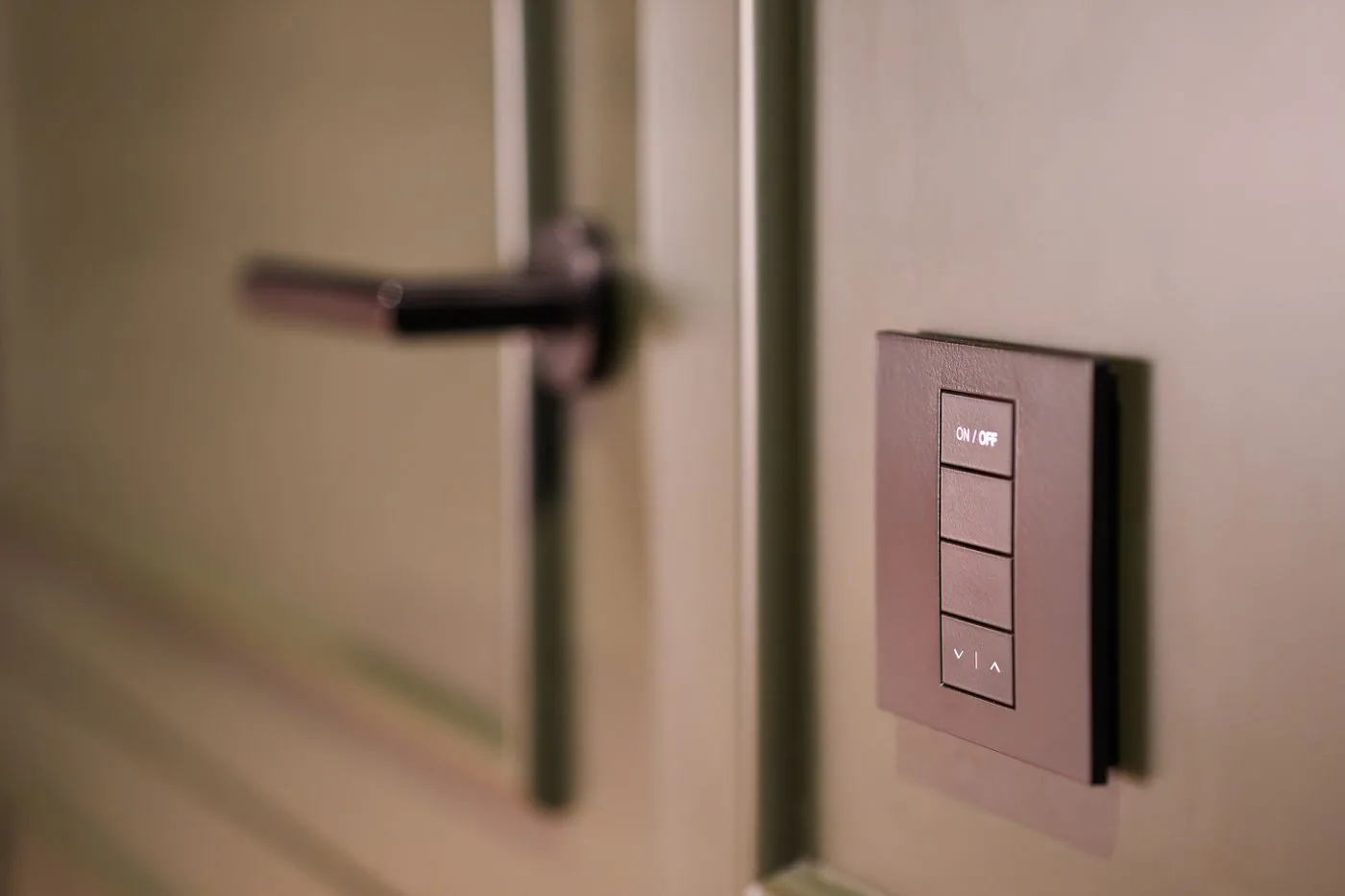
- Smart switches, sockets & wall panels. Touch switches, wall controls, smart sockets and room interfaces. The product must match local voltage and frequency, wall-box dimensions, wiring, neutral-wire availability, load type, current rating and electrical protections. Two switches may look identical while requiring different wiring or supporting different loads.
- Sensors & monitoring devices. Occupancy, motion, temperature, humidity, door-contact, water-leak and other sensors. Review measurement range, accuracy, power source, output type, reporting behaviour, mounting and communication interface. For sensors used in control sequences, the advertised function should be checked against the expected system response, not merely the existence of a status signal.
- Gateways & protocol interfaces. Projects may involve Zigbee, Wi-Fi, KNX, BACnet, Modbus or discrete dry-contact interfaces — these do not all describe the same technical layer or provide automatic cross-system compatibility. Each gateway should be checked for exact device models, protocol versions, supported functions, point mapping and commissioning requirements.
- Guest-room control components. Room controllers, key-card energy-saving interfaces, lighting and curtain actuators, fan-coil control interfaces and guest-room management components. Hotel projects may also require interfaces with a PMS, access-control database or central room-management platform; support for a protocol or API does not by itself prove compatibility with a particular hotel's installed software.
- Actuators, relays & control accessories. Relays, dry-contact I/O modules, power supplies and accessories. Check rated loads, terminals, supply voltage, enclosure type and failure behaviour. The project integrator should approve wiring, protection, control logic and final configuration.
Where smart-device procurement goes wrong
The same wireless label does not mean the same integration. A supplier may say a product is "Zigbee", "Wi-Fi" or "KNX compatible". These labels are useful starting points, not complete integration specifications: a device may connect to a network yet expose different functions, require a particular gateway, depend on a vendor cloud account or lack the application objects expected by the project. Zigbee is a defined interoperable standard with certification schemes, but the actual model, certified status, supported features and ecosystem still matter. Wi-Fi describes networking, not automatic compatibility with a hotel's management application. KNX requires the correct certified product data, topology and commissioning process. A dry contact is an electrical interface, not a building-automation protocol.
The sample works, but the project cannot operate it at scale. One lock can be paired to an app in a showroom. A hotel may need hundreds of credentials, user roles, offline access policies, time synchronisation, staff permissions, audit logs, emergency procedures and integration with room operations. Those requirements should be identified before the first bulk order. A working demonstration of one device is useful, but it is not the same as a documented integration or an approved room mock-up.
Long-term platform support can be more important than first-day features. Some devices require the manufacturer's app, server, firmware or cloud subscription. The buyer should understand who controls the administrator account, whether remote services carry recurring fees, how credentials and data are handled, what happens when connectivity is lost and how updates and spare devices will be supported. A low unit price may not represent the full operating cost if the project is dependent on a platform it cannot manage.
How we support the sourcing process
1. Begin with the installed ecosystem, not a product photograph. We ask for the device schedule, intended use, destination country and the existing system architecture where available: network diagram, gateway or controller models, protocol details, wiring drawings, wall-box dimensions, electrical supply, integrator contacts and required user functions. If the architecture has not been defined, we identify what the appointed controls designer or systems integrator needs to confirm before the supplier is asked to guarantee compatibility.
2. Make the proposed interface explicit. For each device, suppliers should specify the actual model, hardware and firmware version, power and wiring requirements, radio or network interface, application protocol, supported functions and dependencies. For gateways and controllers, point lists, application data, API documentation or approved integration guides may be necessary. We compare documented features with requested functions and record any exclusions, custom development needs or reliance on third-party services.
3. Separate compliance, certification and compatibility. A product may need electrical-safety, EMC, radio or access-control evidence depending on its type and destination market. Product-specific Zigbee or KNX certification can be checked using the corresponding programme's records where relevant. BACnet is a building-control communication protocol defined in ISO 16484-5; use of the name does not mean a particular product supports every BACnet function. Certification to one standard does not automatically establish compliance with all local electrical rules, fire-door requirements, data-protection obligations or software integration needs.
4. Arrange a representative sample or mock-up where appropriate. For higher-risk projects, a sample should be tested with the intended gateway, controller, app or platform rather than only the supplier's demonstration environment. The test plan may cover pairing, normal operation, loss of power, network interruption, reconnection, user permissions, maintenance access and recovery after a reset. For hotel smart locks, special attention may be needed for credential issuance and revocation, mechanical and emergency access, battery replacement and the approved egress arrangement — approved by the project's authorised integrator and life-safety professionals.
5. Review software support and information security. Before ordering, discuss administrator-account ownership, access credentials, firmware update mechanisms, update support period, offline functions, cloud dependencies, subscription fees and any data processed outside the project. Where security or privacy requirements are specified, request relevant supplier documentation. NIST's IoT cybersecurity guidance provides a useful reference framework; it is not a certificate that automatically applies to every product.
6. Coordinate production and delivery records. Subject to the agreed scope, we can coordinate checks of model codes, firmware or hardware revisions where identifiable, labels, quantity, accessories, power supplies, wiring diagrams, packaging, manuals and shipment records. Where the project requires a fixed firmware or hardware version, that requirement should be recorded with the supplier before production. The site integrator remains responsible for final programming, commissioning, cybersecurity configuration and acceptance testing.
Typical information for supplier enquiries
A device list is a good start. For controls and integrated systems, an interface or function schedule is even more useful. If only a device list or product photos exist, we can start there and identify the key information gaps.
- Device schedule. device type, model or reference, quantity and application; power supply, voltage, wiring and wall-box details; door, room or location and user or load requirements; finish, mounting, dimensions and environmental conditions; destination market and relevant safety or radio requirements; sample, acceptance-test and delivery requirements.
- System and integration schedule. existing controller, gateway or PMS platform and version; network type, protocol, gateway and interface requirements; functions, point list, scenes, feedback and user roles; offline operation, access policy and failure behaviour; software account, API, cloud and support dependencies; commissioning responsibility and required integration evidence.
Questions specific to this line
If a device supports Zigbee or Wi-Fi, will it work with our existing system?
+Not necessarily. The protocol label is a starting point. Compatibility depends on the exact device, gateway, protocol or application profile, supported functions, firmware and platform integration. Wi-Fi connectivity alone does not establish application compatibility. We recommend checking the model-specific documentation and testing a representative device with the intended platform before bulk ordering.
Can you source KNX devices for an existing project?
+We can coordinate enquiries for specified KNX products where suitable suppliers are available. The project should provide the required functions, existing topology and product or manufacturer requirements. KNX product certification and availability of suitable ETS product data may be relevant, but selection, addressing, parameterisation and commissioning must be approved and performed by the appointed KNX professional.
Can a hotel smart lock integrate with our PMS?
+Possibly, but a statement such as "PMS compatible" needs to be verified against the actual PMS vendor, software version, integration method, supported functions and commercial terms. The hotel operator and its systems integrator should confirm the API, credential workflow, network dependencies, data responsibilities and pilot acceptance criteria. We can help gather supplier evidence and coordinate a sample test.
What should happen when the network or power fails?
+That depends on the device and the agreed safety and operating requirements. Some functions may continue locally, while others depend on a gateway or cloud service. For smart locks and access-control equipment, egress and emergency behaviour must be assessed against the applicable door and life-safety requirements. Test the intended failure scenarios in the representative setup; do not assume all products behave the same way.
What should we check about app, cloud and cybersecurity support?
+Ask who owns the administrative accounts and data, whether subscriptions are required, what happens if the cloud is unavailable, how firmware is updated, how long updates will be supported and whether credentials or logs can be managed or exported. Local regulations and the project's information-security policy may impose additional requirements. Supplier statements should be documented rather than assumed.
Are CE, Zigbee, KNX or UL 294 claims interchangeable?
+No. These refer to different regulatory or certification contexts. A device may require product-specific electrical, radio or access-control evidence depending on the destination market and application. Zigbee and KNX certification concern their respective technologies; UL 294 concerns access-control system equipment within its scope. The project must confirm which evidence is required for the exact product and installation.
Can you arrange a sample test before ordering hundreds of devices?
+Where practical, yes. A representative sample or mock-up can be coordinated to check the agreed functions with the actual gateway, app, controller or platform. Test cases should be defined in writing, including connectivity, user permissions, normal and offline operation, recovery and any critical failure behaviour. A sample test can reduce uncertainty but does not substitute for full project commissioning.
Do you provide system design, programming or commissioning?
+No. Qianhe provides sourcing and supplier coordination. The appointed systems integrator, electrical designer and relevant safety professionals remain responsible for final architecture, wiring design, programming, network and cybersecurity configuration, site commissioning and approval. We can coordinate the supplier information and agreed product or sample checks needed to support their work.
Related Products & Services
Explore HVAC equipment and control interfaces, door hardware and lock-body compatibility and smart controls in prefabricated wiring, or read about supplier verification and inspection coordination.
HVAC & Pump Equipment
Match devices and control interfaces to the specified equipment package.
Open this line → 02Architectural Hardware
Door hardware, lock bodies and mechanical compatibility alongside smart-lock procurement.
Open this line → 03Prefab & Modular Housing
Coordinate smart controls with prefabricated room wiring, service zones and installation interfaces.
Open this line →Have a device list or control schedule to source?
Send us your device schedule, wiring or interface requirements, existing gateway or controller models, intended functions and destination market. We can review the available information and identify what needs to be confirmed before supplier enquiries.
线路、网络、通信协议、软件平台、账户权限和长期技术支持,都必须与项目实际使用的系统相匹配。
骞和行协助海外承包商、开发商和项目采购团队从中国采购适用的智能设备与控制部件。我们根据项目现有系统要求协调供应商询价,核对接口和技术文件,并按约定范围支持样品、生产和出运工作。我们不替代楼控设计师、门禁专业人员或系统集成商。
我们采购的产品
可选产品取决于项目系统架构、所需认证和供应商的实际技术支持能力。我们会核对具体型号和集成要求,而不是假设同一技术标签下的设备都能配合使用。
- 智能门锁与门禁设备:酒店和住宅智能门锁、读卡设备、凭证和配套门控部件。需确认锁体、锁芯或应急机械开启、门向、开孔尺寸、凭证体系、电池方案、操作记录和管理软件。涉及疏散通道或防火门的设备,应由项目责任专业人员在采购前确认生命安全与门五金要求。
- 智能开关、插座与墙面控制面板:触控开关、墙面控制器、智能插座等。应核对目的地电压频率、底盒尺寸、接线方式、是否有零线、负载类型、电流等级和电气保护。两个外观相同的开关,也可能因接线或负载要求不同而不能互换。
- 传感器与状态监测设备:人体感应、温湿度、门磁、水浸等。需核对量程、精度、供电与电池维护、信号类型、上报机制、安装环境和通信接口。参与自动控制的传感器,还要核对它能否触发项目需要的控制动作。
- 网关与协议接口模块:项目可能涉及 Zigbee、Wi-Fi、KNX、BACnet、Modbus 或干接点接口,但这些概念不处于同一技术层级,也不代表自动互通。应核对具体网关型号、软件版本、支持设备、数据点表、功能映射和调试要求。
- 酒店客房控制部件:客房控制器、取电开关、灯光窗帘执行器、风机盘管控制接口及客房管理组件。酒店还可能需要与 PMS、门禁系统或客房管理平台交换数据——支持某个协议或 API,不代表必然兼容项目已有的软件平台。
- 继电器、执行器与控制配件:继电器、干接点输入输出模块、电源等。需确认额定负载、供电、端子、防护条件以及故障状态下的行为。线路设计、保护、控制逻辑和最终配置,应由项目系统集成方确认。
智能设备采购真正容易出什么问题
同一个「无线协议」标签,不代表一定能互通。 供应商可能说设备支持 Zigbee、Wi-Fi 或 KNX。这些信息只能作为初步筛选依据:设备能联网,不代表能调用项目所需功能;也可能需要特定网关、厂家云账号或专用 APP,甚至缺少项目要求的数据点。Zigbee 有技术规范和认证体系,但仍需核对实际型号、认证状态、功能和生态系统;Wi-Fi 主要解决网络连接,不等于与管理软件兼容;KNX 需要合适的产品资料、网络拓扑和工程调试;干接点则是电气接口,不是楼宇通信协议。
样品可运行,不代表整栋酒店可以管理。 一把门锁在展厅里能配对手机,并不能证明几百间客房的管理需求能够满足。酒店还要考虑发卡、凭证注销、人员权限、离线操作、记录查询、紧急流程以及与客房运营系统的衔接。这些要求应在首批下单前明确。单个设备演示只能证明一部分功能,有书面测试范围的代表性样品或样板房验证才更有价值。
后续软件支持可能比初期功能更重要。 部分设备依赖厂家 APP、云平台、固件或付费服务。采购前需要明确管理员账户归谁控制、是否有持续服务费、断网后能否工作、账号与数据如何管理、能支持多久的软件更新,以及后期能否补充同型号备件。如果项目长期依赖一个无法自行管理的平台,表面上低廉的单价未必代表较低的长期使用成本。
我们如何协助采购
1. 先看项目现有系统,再看设备外观。 我们先查看设备表、使用要求、目的市场和现有系统架构:网络图、网关和控制器型号、协议要求、接线图、底盒尺寸、电气规格、集成商联系人和所需功能。如果架构尚未明确,我们会整理需要楼控设计方或系统集成商确认的事项,而不要求供应商在技术条件不完整时保证「完全兼容」。
2. 把接口和功能说清楚。 每款设备应明确型号、硬件和固件版本、电源与接线要求、接口、通信协议、支持功能及依赖条件;网关和控制器可能需要提供点位表、API 或厂家集成说明。我们协助比较书面技术资料,并记录功能差异、需额外开发的项目或对第三方平台的依赖。
3. 分开核对认证、合规和兼容性。 根据设备类型与目的市场,可能需要电气安全、电磁兼容、无线电或门禁设备相关证明;适用时可核对 Zigbee 或 KNX 的产品认证记录。BACnet 是 ISO 16484-5 定义的通信协议,协议名称不代表设备具备项目要求的全部功能。通过某个认证,不自动代表满足所有当地电气法规、防火门要求、隐私责任或软件集成条件。
4. 按项目风险讨论样品或样板验证。 重要项目应尽量将样品放在计划实际使用的网关、控制器、APP 或平台上测试,而不是只看供应商演示。可事先约定测试项:配对、正常操作、断电断网、恢复连接、人员权限、维护访问及复位恢复等。酒店智能门锁尤其需要核对发卡与注销、机械或紧急开启、电池维护和获批准的疏散方式,并由项目系统集成与生命安全专业人员确认。
5. 关注软件维护与信息安全。 正式采购前应询问:管理员账户和数据归谁管理、固件如何更新、支持期限、是否依赖云服务器、断网后能否执行关键功能、是否存在订阅费,以及哪些数据会被传输或保存在项目之外。有安全或隐私要求时,应索取供应商相关文件。NIST 的物联网设备安全建议可作为核对参考框架,但它不是所有产品自动适用的认证。
6. 协调生产、型号与交付资料。 按约定范围,可协调核对设备型号、可识别的硬件或固件版本、标签、数量、配件、电源、接线图、说明书、包装和出运记录。项目需要固定版本时,应在生产前形成书面约定。现场编程、网络安全配置、正式调试及验收仍由项目集成团队负责。
询价前,建议提供哪些资料
设备清单是很好的起点;对控制系统和集成项目,接口或功能表更有用。如果目前只有设备清单或产品照片,可以先沟通,我们会帮助找出关键信息缺口。
- 设备清单:设备类型、型号或参考、数量和用途;供电、电压、接线与底盒信息;门/房间/安装位置及使用或负载要求;饰面、安装方式、尺寸与环境条件;目的市场及相关安全或无线电要求;样品、验收测试和交付要求。
- 系统与集成资料:现有控制器、网关或 PMS 平台及版本;网络类型、协议、网关与接口要求;功能、点位表、场景、反馈与用户权限;离线运行、权限策略与故障行为;软件账户、API、云与支持依赖;调试责任与所需集成证据。
这个品类常见的问题
支持 Zigbee 或 Wi-Fi,就一定能接入现有系统吗?
+不一定。还需要核对具体设备型号、网关、协议或应用配置、支持功能、固件版本及平台集成方式。Wi-Fi 连接成功也不等于管理软件一定能控制。建议在批量采购前先用目标平台完成代表性样品测试。
可以采购已有 KNX 系统所需的设备吗?
+在有合适供应商的情况下可以协调询价。项目应提供现有拓扑、要求的控制功能、产品或品牌条件。适用时还应核对 KNX 认证状态和 ETS 产品资料。地址分配、参数设置、程序配置及现场调试仍应由指定的 KNX 专业人员完成。
酒店智能门锁可以连接我们正在使用的 PMS 吗?
+有可能,但「兼容 PMS」必须对应具体品牌、软件版本、接口方式和功能需求。酒店运营团队与系统集成商应确认 API、发卡和权限流程、网络依赖、数据责任及试验验收条件。我们可以协助收集供应商文件并协调样品验证。
断网或断电之后,智能设备应该怎样工作?
+取决于产品和项目约定的安全、运营要求。部分功能可以本地运行,另一些可能依赖网关或云平台。对于智能门锁及门禁,疏散和应急功能必须符合适用的门系统与生命安全要求。应在代表性样品上测试预期的故障场景,而不是假设所有产品有相同表现。
APP、云平台和网络安全要检查什么?
+建议确认管理员权限和数据所有权、是否存在订阅费、云服务不可用时怎么办、固件怎样更新、厂家提供多少年支持,以及能否管理或导出凭证与记录。相关要求还应考虑项目的信息安全政策和当地法规。不要只根据厂家销售宣传判断。
CE、Zigbee、KNX 或 UL 294 可以相互替代吗?
+不可以,它们属于不同的监管、技术或认证体系。特定产品可能需要不同的电气、无线电或门禁设备证明。Zigbee、KNX 分别对应各自技术和产品认证体系;UL 294 涉及其适用范围内的门禁系统设备。应根据具体产品及用途确认真正需要的文件。
批量采购前可以先做样品测试吗?
+在条件允许时可以协调。应使用实际计划的网关、APP、控制器或管理平台,事先明确连接、权限、正常及离线操作、故障恢复等测试范围。样品测试有助于降低不确定性,但不能替代整个项目的安装和正式调试。
你们负责楼宇控制设计、编程和现场调试吗?
+不负责。骞和行提供采购及供应商协调服务;系统架构、接线设计、程序配置、网络安全、现场调试和审批仍由指定设计方及系统集成商负责。我们可以协调他们需要的供应商资料和已约定的样品或出厂检查。
有智能设备清单或控制系统需求需要采购?
把设备清单、接线或接口要求、现有网关和控制器型号、需要实现的功能以及目的市场告诉我们。我们会先核对现有资料,并梳理联系供应商前需要确认的事项。